


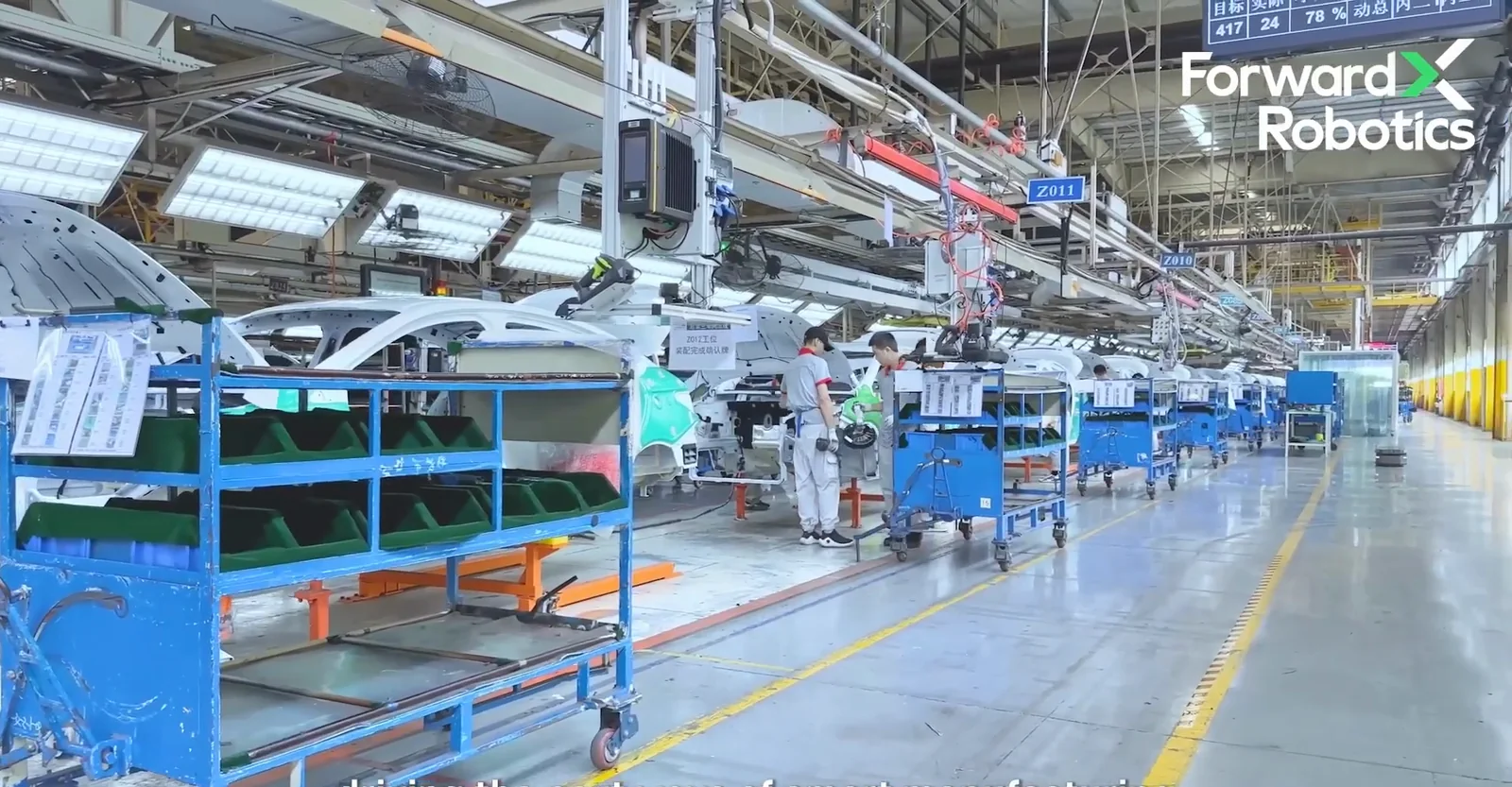
Key points
Automating a factory with robots means handing repetitive, arduous or low value-added tasks to robots: handling parts, loading machines, internal transport, kit preparation. In 2025, according to the World Robotics 2026 report of the International Federation of Robotics (IFR), France installed nearly 4,500 industrial robots, down 8 %, and ranks as the third largest European market behind Germany and Italy (IFR, 24 September 20261). Worldwide, the operational stock reached a record 5 million industrial robots.
Industrial robotics in France therefore lags behind its neighbours: Germany installed around 24,800 robots in the same year, or 41 % of the European Union market (IFR, EU-27 press release2). For a French manufacturer, automating is not a question of available technology but of method: choosing the right type of robot for each workstation, costing the project, working with an integrator and validating the gain on site before investing. This page summarises each of these steps and links to the detailed guides.
What does automating a factory with robots mean?
Factory robotisation is the introduction of programmable robots into the production process or the internal logistics of a site. It differs from conventional automation (conveyors, special-purpose machines) through its flexibility: a robot can be reprogrammed for another part, another workstation or another route. Four families of robots are found in factories today: the industrial robot arm, fixed and isolated behind guards; the collaborative robot (cobot), designed to work close to operators; the autonomous mobile robot (AMR), which carries loads between workstations; and, more recently, the humanoid robot, still at the pilot deployment stage. A factory automation project often combines several of these families.
Where does industrial robotics stand in France in 2026?
Industrial robotics in France is growing more slowly than in neighbouring European countries. The figures published by the IFR in September 2026 cover the year 2025.
| Indicator (year 2025) | Value | Source |
|---|---|---|
| Industrial robots installed in France | nearly 4,500 (down 8 %) | IFR1 |
| France's rank in Europe | 3rd market | IFR |
| France's share of EU installations | 7 % | IFR EU-272 |
| Main customer sectors in France | automotive (21 %), metal industry (18 %) | IFR EU-27 |
| Installations in Germany | around 24,800 | IFR EU-27 |
| Installations in the European Union | 60,500 (down 11 %) | IFR EU-27 |
| Global operational stock | 5 million (up 9 %) | IFR |
| Global forecast for 2026 | 655,000 installations (up 9 %) | IFR |
On robot density, the IFR places France among the eight Western European countries in the global top 20 (2024 data), without publishing its exact figure in the public press release. The European Union average reaches 231 robots per 10,000 manufacturing employees, compared with 449 in Germany and a global average of 132 (IFR, 8 April 20263).
Which robots for which factory tasks?
The choice of robot depends first on the task, not on fashionable technology. The table below gives the benchmarks used during a feasibility study.
| Type of robot | Typical factory tasks | Environment | Point of attention |
|---|---|---|---|
| Industrial robot arm | welding, painting, palletising, high-speed machine loading | closed cell, guards | integration and safeguarding of the cell |
| Collaborative robot (cobot) | screwdriving, light assembly, inspection, machine tending | close to operators, after a risk assessment | limited payload and speed |
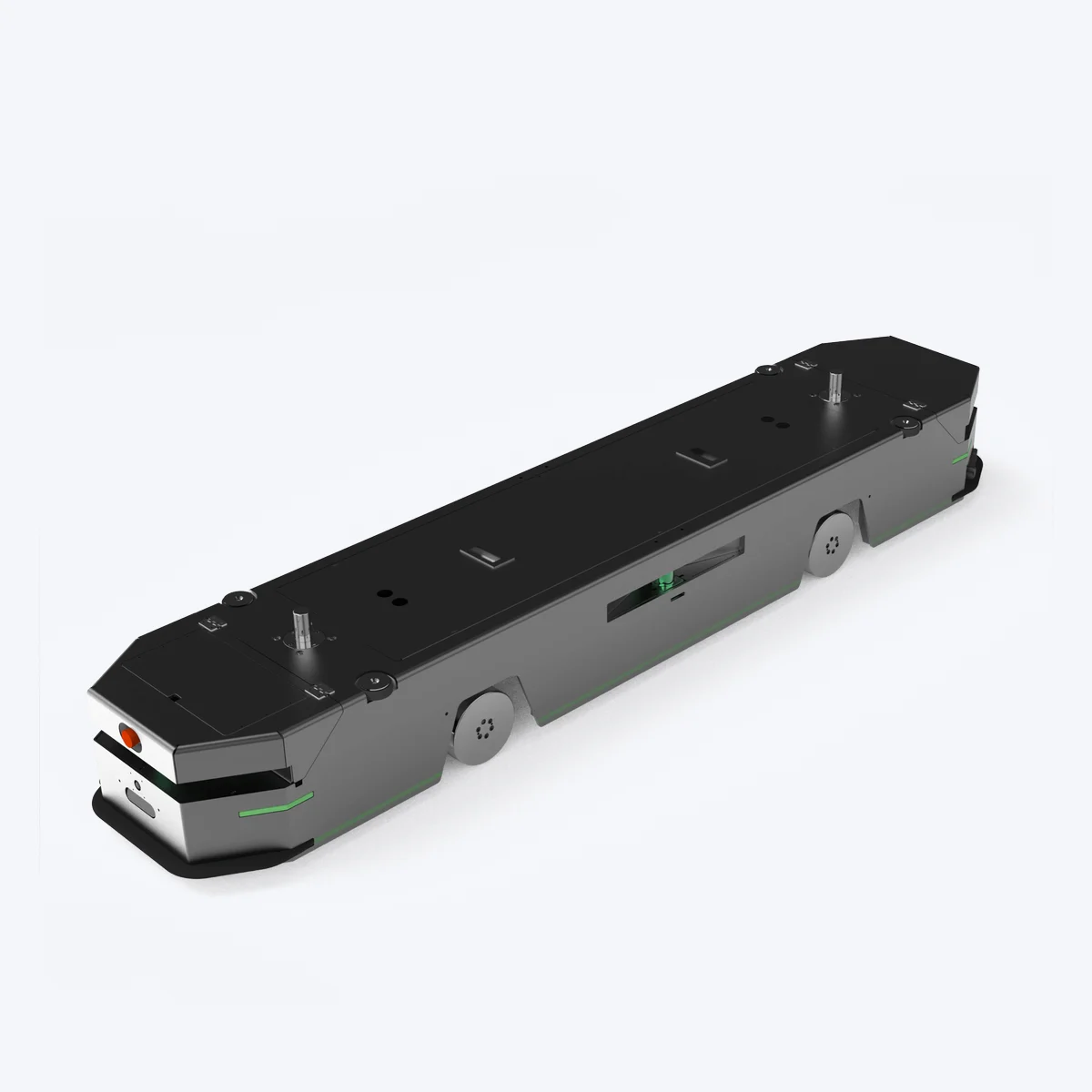
| Autonomous mobile robot (AMR) | transport of totes, work in progress and pallets between workstations and the stores | aisles shared with pedestrians and forklifts | flows, floors, interfaces with the information system |
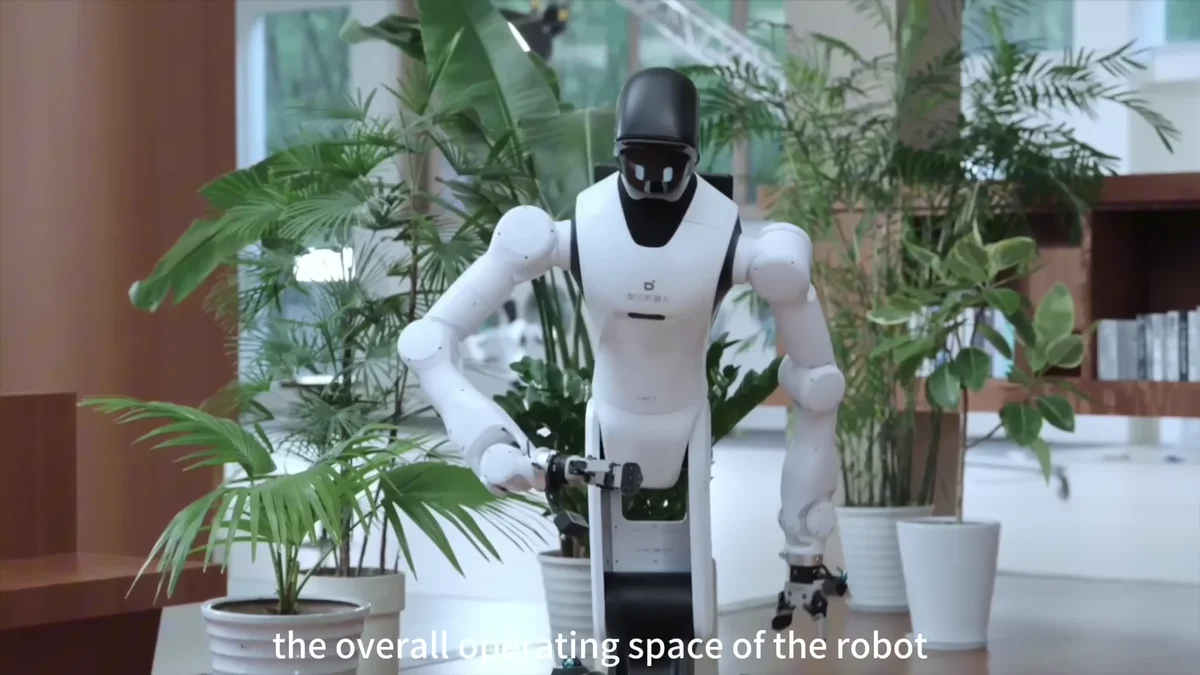
| Humanoid robot | handling at workstations designed for humans, varied tasks | unmodified environment | maturity, throughput and cost to be validated in a pilot |
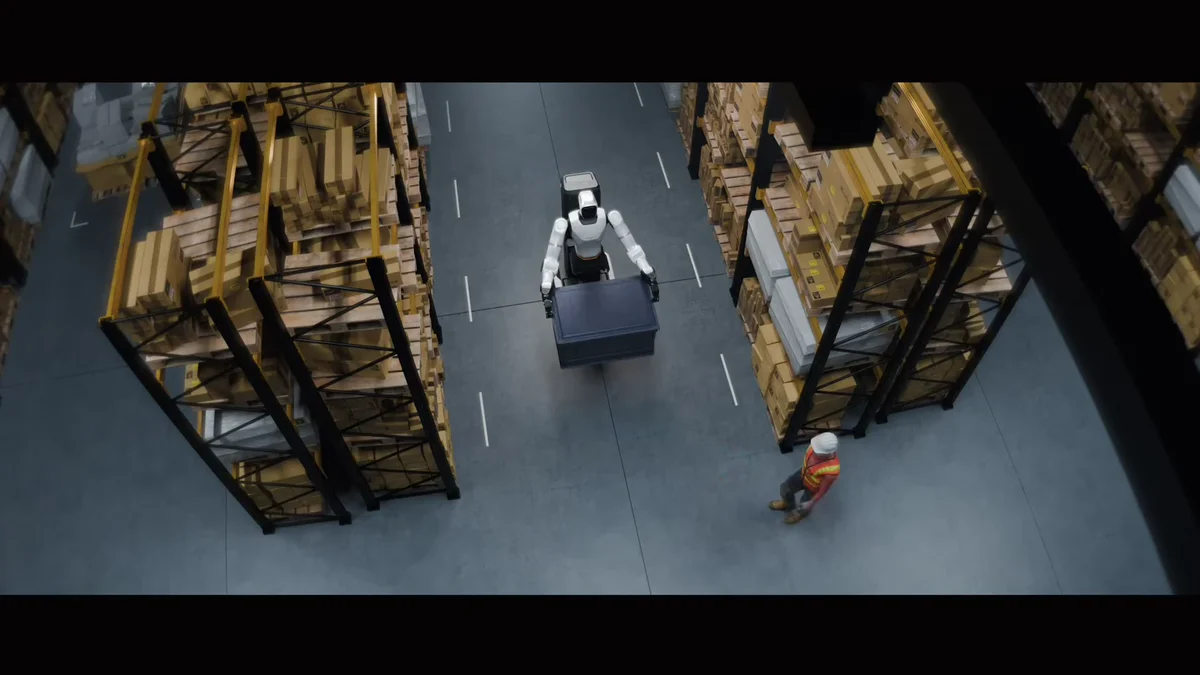
In practice, many factories start with internal transport, where an AMR frees up operators who walk several kilometres per shift, before automating the workstations themselves.
How to automate an industrial SME?
Automating an industrial SME calls for a step-by-step approach: start from an arduous workstation or a measured bottleneck, quantify the expected gain, then test before rolling out. SMEs rarely have a manufacturing engineering team dedicated to robotics, which makes the choice of partners and of the first use case decisive. Our guide automating an SME details the steps, the frequent mistakes and the questions to ask yourself before signing.
How much does an industrial robot cost?
The price of an industrial robot varies widely depending on the type of robot, the payload, the peripherals (gripper, vision, safety) and above all the integration cost, which often exceeds that of the robot itself. Comparing catalogue prices therefore makes little sense without a study of the workstation. The guide industrial robot price sets out public, sourced market ranges, the cost items and the logic of a quote after a study.
How to choose a robotics integrator?
The robotics integrator designs the cell or the complete system around the robot: gripping, safety, programming, commissioning and training. A good integrator knows your sector, commits to measurable performance and provides support after start-up. The guide choosing a robotics integrator lists the selection criteria, the questions to ask and the clauses to check in the contract.
Cobot, AMR or humanoid: which robot should you choose?
Cobots, AMRs and humanoids meet different needs: the cobot works at a fixed workstation, the AMR moves loads between workstations, and the humanoid targets varied handling tasks in an environment designed for humans. The right choice depends on the flow to automate, the throughput and the maturity expected. Our comparison cobot, AMR or humanoid puts the three families side by side, criterion by criterion.
What role does internal logistics play in factory automation?
Internal logistics is often the first lever of factory automation, because it takes up a great deal of handling time with no added value. According to the IFR, transport and logistics is the leading application for professional service robots, with 117,500 units sold worldwide in 2025, or 47 % of the market (IFR, 30 September 20264). The manufacturer ForwardX, of which RoboNex is the official distributor in France, reports more than 4,500 AMRs deployed at more than 250 sites (forwardx.com5, accessed on 21 November 2026). To go further, see our pillar page logistics robots and warehouse automation.
Do humanoid robots have a place in factories?
Humanoid robots are entering factories, but at the pilot stage rather than in mass production. The IFR estimates that around 7,000 full-size humanoids were sold worldwide in 2025 and notes that most applications remain specialised (IFR, 30 September 20264). The manufacturer AGIBOT, which RoboNex distributes in France, delivered its 20,000th robot on 24 September 2026 (AGIBOT6). The appeal of a humanoid is that it fits into an existing workstation without redesigning it. Our pillar page humanoid robots for business details the industrial uses and the proof-of-concept method.
See it in action
Watch robots working over a longer period
Find the AGIBOT broadcasts and their context in our G2 guide: tasks, line output and conditions to examine before a project.
Explore the guide and the broadcastsWhat safety rules apply to a robot in a factory?
The safety of a robot in a factory rests on a risk assessment specific to each installation. For industrial and collaborative robots, INRS (the French national research and safety institute) refers to the standards NF EN ISO 10218-1 and NF EN ISO 10218-2, which describe four technical principles that can be combined: safety-rated monitored stop, hand guiding, speed and separation monitoring, and power and force limiting in the event of contact (INRS, collaborative robots7). INRS also stresses the risks of musculoskeletal disorders and psychosocial risks, and organisational measures: training, monitoring of the activity, adaptation of workstations. Mobile robots fall under a specific standard, presented on our page ISO 3691-4 standard.
What public support exists for industrial robotics in France?
The France 2030 plan supports the French robotics sector, mainly on the supply side. The call for projects "Offre de robots et machines intelligentes d'excellence" (supply of excellent robots and intelligent machines), launched in July 2023 and operated by Bpifrance, selected 31 new winners in June 2026, for 68 million euros of public aid and more than 135 million euros of productive investment (DGE, 18 June 20268). This scheme targets designers of robots and components, not directly the manufacturer buying a robot. To finance an equipment project, see our pillar page financing a robot, which lists purchase and rental options and the aid available to users.
Where to start a factory automation project?
A factory automation project starts with measurement, not with the catalogue. The steps that limit the risk are as follows.
| Step | Objective | Deliverable |
|---|---|---|
| 1. Diagnosis | identify arduous workstations, bottlenecks and handling flows | list of quantified use cases |
| 2. Feasibility study | check that the technology meets the task, the throughput and safety | choice of robot type and first estimate |
| 3. Proof of concept | test the robot on the real site, under production conditions | indicators measured before and after |
| 4. Integration | connect the robot to workstations, flows and the information system | validated installation and trained operators |
| 5. Deployment | extend to other workstations or teams | ramp-up plan and support |
This sequence avoids the most expensive mistake: buying a robot before proving that it can keep up with the throughput in your factory.
To turn technology into a project, compare choosing a cobot, AMR or humanoid, then industrial project budgets. automating an SME proposes a first scope, choosing a robotics integrator allocates responsibilities, and robotics grants and subsidies complement the financial assessment.
About RoboNex describes the team’s role and project support in France.
How RoboNex supports you
RoboNex SAS is the official distributor in France of AGIBOT (humanoid robots and embodied AI), ForwardX (autonomous mobile robots for intralogistics) and KEENON (service robots). For an industrial project, RoboNex works in three stages. First, a proof of concept on your site, with the ForwardX or AGIBOT robot suited to the chosen use case and indicators defined in advance. Next, integration with workstations, flows and your tools. Finally, deployment, team training and support. Each proposal is drawn up on quotation, after a site study: RoboNex does not display catalogue prices, because the real cost depends on the environment and the integration. To learn more about the ranges, see the AGIBOT and ForwardX pages.
Frequently asked questions
RoboNex team · answers in French, English and Chinese
Which industrial robotics companies in France can support me?

Three types of players are involved in a project: robot manufacturers, official distributors who represent a brand in France, and integrators who design the complete solution on site. RoboNex is the official distributor in France of AGIBOT, ForwardX and KEENON, and supports the proof of concept, integration and deployment. For a complex robotic cell project, it is worth comparing several integrators, as our dedicated guide explains.
What is the difference between factory automation and robotisation?
Factory automation refers to any equipment that performs a task without human intervention, such as a conveyor, a special-purpose machine or a programmable logic controller. Robotisation is a subset of automation: it uses reprogrammable robots, able to switch part, route or workstation. A robot therefore offers more flexibility than a special-purpose machine, which suits small and medium batch production.
Can an autonomous robot move around a factory alongside operators?
Yes. An autonomous mobile robot (AMR) detects obstacles and recalculates its route, which allows it to share aisles with pedestrians and forklifts. Its commissioning nevertheless requires a risk assessment, marking of the zones and compliance with the standard applicable to driverless industrial trucks, ISO 3691-4. Our page dedicated to this standard details the requirements.
How long does it take to automate a workstation?
The duration depends on the type of robot and the complexity of the integration. An AMR carrying totes between two zones is deployed faster than a custom welding cell. The manufacturer ForwardX, for example, announces deployment in four weeks on its website, a manufacturer figure to be confirmed for each factory. An on-site proof of concept makes it possible to set a realistic schedule before any commitment.
Does robotisation eliminate factory jobs?
Robotisation mainly transforms jobs. Robots take over repetitive, arduous or dangerous tasks, and operators refocus on supervision, quality control and maintenance. INRS points out that the arrival of a robot must be accompanied by training and by thinking about work organisation. The effects on employment therefore depend largely on how the project is run.
Why does France install fewer robots than Germany?
According to the IFR, Germany installed around 24,800 industrial robots in 2025, compared with nearly 4,500 in France. The gap is due in particular to the weight of the German automotive industry, the leading customer for industrial robots, and to the size of the industrial base. France nevertheless remains the third largest European market in 2025 and is in the global top 20 for robot density according to the IFR.
Updated on 21 November 2026.
Sources and references (8)
- ifr.org/ifr-press-releases/news/five-million-robots-now-operate-in-factories-globally
- ifr.org/downloads/press_docs/EN-2026-SEP-14-IFR_Press_Release_WR-EU-27.pdf
- ifr.org/ifr-press-releases/news/robot-density-surges-in-europe-asia-and-americas
- ifr.org/ifr-press-releases/news/global-sales-of-professional-service-robots-surge-24-perce
- forwardx.com/
- store.agibot.com/pages/about-us
- inrs.fr/risques/robots-collaboratifs/ce-qu-il-faut-retenir.html
- entreprises.gouv.fr/espace-presse/france-2030-31-nouveaux-projets-pour-accelerer-lemergenc