


Key points
Renting a professional robot rather than buying it means choosing between three contracts: the finance lease (crédit-bail, leasing with a purchase option), the operating rental (location financière, without a purchase option) and long-term rental or robots as a service (RaaS), which usually adds maintenance and support to the payment. As of 21 November 2026, Bpifrance (the French public investment bank) offers a crédit-bail mobilier (equipment finance lease)1, generally over 3 to 7 years, and a location financière (operating rental)2, generally over 2 to 7 years, both from €70,000 excl. VAT of investment, with payments that "constitute deductible expenses".
The right contract depends on three questions: does the company want to own the robot eventually, for how long is the use certain, and who should carry the maintenance? For a first robot or a fast-moving technology, such as humanoids, an arrangement without ownership limits the risk. For a robot central to production for more than five years, purchase or a finance lease is generally cheaper over the period. This page complements our guide to financing a robot.
Which arrangements let you rent a professional robot?
Renting a professional robot takes four forms, which differ in final ownership and included services. The table below compares them with purchase, using the conditions of the Bpifrance catalogue consulted on 21 November 2026.
| Arrangement | Ownership at end of contract | Services included | Indicative term | Threshold at Bpifrance |
|---|---|---|---|---|
| Purchase (cash or equipment loan3) | Immediate | No, separate maintenance contract | Loan: 2 to 7 years | Loan from €50,000 excl. VAT |
| Finance lease | Yes, if the purchase option is exercised | Not by default | 3 to 7 years | €70,000 excl. VAT |
| Operating rental | No, return or renewal | Not by default | 2 to 7 years | €70,000 excl. VAT |
| Long-term rental | No | Often maintenance and assistance | Depends on the lessor | Outside the Bpifrance catalogue |
| RaaS (subscription) | No | Robot, software and services depending on the offer | Depends on the manufacturer | Outside the Bpifrance catalogue |
How does a robot finance lease work?
A robot finance lease funds an asset for professional use "combined with a unilateral promise to sell (purchase option)", according to the definition of the Bpifrance crédit-bail mobilier1. The company pays lease payments, which can be straight-line, decreasing or start with a larger first payment, then decides at the end of the contract whether to buy the robot for its residual value.
Bpifrance indicates a term generally equal to the economic useful life of the asset, a fixed or variable rate and arrangement fees. A finance lease suits a robot with stable, long-term use, when the company wants to preserve its cash at the outset without giving up ownership.
What is the difference between operating rental and long-term rental of a robot?
Operating rental of a robot is pure financing: the lessor buys the robot, the company pays rental payments, then returns or renews the equipment, with no purchase option. The Bpifrance location financière2 starts at €70,000 excl. VAT, generally over 2 to 7 years, and does not mention any included maintenance.
Long-term rental (location longue durée, LLD) of a robot bundles use of the equipment and services into a single payment: preventive maintenance, repairs, software updates, sometimes insurance. The cost becomes predictable, but the content varies from one lessor to another: response times and replacement in the event of a breakdown need to be read carefully.
What is RaaS, or robots as a service?
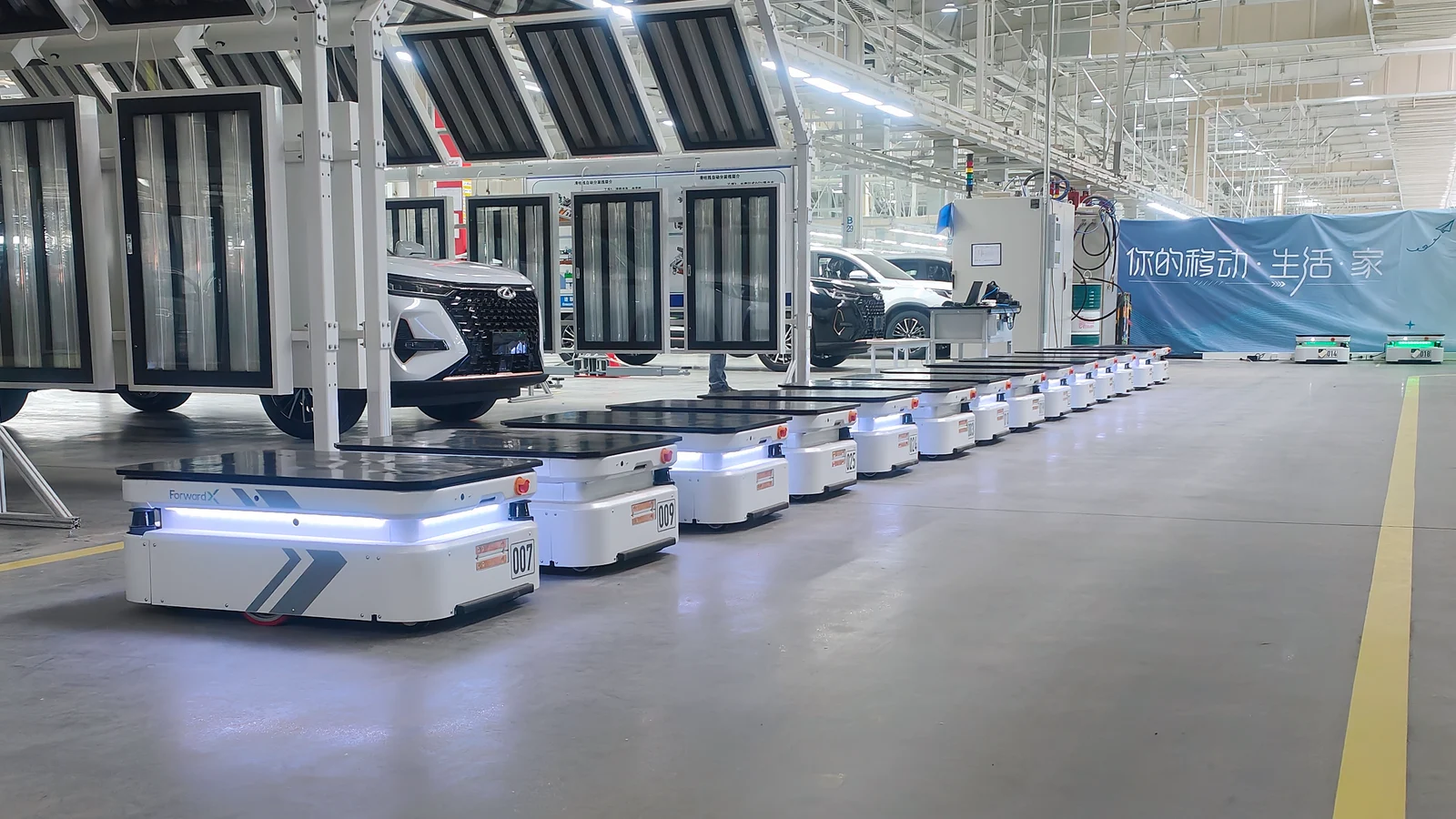
RaaS ("Robots as a Service") is a subscription: the company pays for the use of a robot and associated services, without buying it, and can adjust the number of robots to activity. On its RaaS page4, ForwardX presents a "subscription-based" solution for its autonomous mobile robots, which makes automation an operating expense rather than an upfront investment, and promises to add robots quickly when demand increases.
The page specifies neither term, nor included services, nor countries covered: availability in France is checked at quotation stage. RaaS is best suited to a fleet of mobile robots whose size follows volumes.
Rent or buy a robot: how to choose?
The choice between renting and buying a robot depends on how long the use is certain, how fast the technology is evolving and the cash position. The following table covers the most frequent situations.
| Situation | Arrangement that often fits | Point to watch |
|---|---|---|
| First robot, use to be confirmed after a proof of concept | Long-term rental or RaaS | Minimum term and exit fees |
| AMR fleet following activity peaks | RaaS or long-term rental | Adding and removing robots during the contract |
| Humanoid robot, fast-evolving technology | Rental without purchase option | Whether software updates are included |
| Central robot, use of more than 5 years | Purchase with a loan, or finance lease | Residual value, maintenance contract |
| Tight cash position, project above €70,000 excl. VAT | Finance lease | Total contract cost |
These guidelines do not replace the advice of a chartered accountant.
Which clauses should you negotiate in a robot rental contract?
A robot rental contract should be judged on its service clauses as much as on its payment. Six points deserve careful reading:
- Maintenance: preventive and corrective, parts and labour, guaranteed response time.
- Availability: replacement robot in the event of a long breakdown, and any penalties.
- Software: updates, fleet management software licences, interfaces with the WMS or ERP.
- Scalability: adding or removing robots, hardware upgrades.
- Insurance: who insures the robot, against which risks, with which excess.
- End of contract: notice period, return condition, refurbishment fees, purchase option price under a finance lease.
The monthly payment alone does not allow two offers to be compared. You need to calculate the total cost over the term, services included, then set it against the expected gains, as explained in our guide to calculating the ROI of a robot.
Will a robot finance lease qualify for the future suramortissement?
A robot finance lease could qualify for the industry 4.0 suramortissement (enhanced tax depreciation) provided for in the 2027 finance bill, but this scheme has not been adopted as of 21 November 2026. According to LégiFiscal (2 October 2026)5, the deduction would remain available under a finance lease, for new robots and cobots acquired between 1 January 2027 and 31 December 2029. Operating rental and RaaS, where the company does not become the owner, are not mentioned. The full picture is in our guide to robotics grants and subsidies.
Can you rent a robot for a short period?
Short-term robot rental, for a trade show or an event, is a different need: our humanoid robot rental page covers it, and robot-serveur.com covers restaurant serving robots.
Before choosing a payment schedule, compare the return on investment calculation, potential robotics grants and subsidies and industrial project budgets. For humanoids, distinguish this financing from humanoids for an event: RoboNex sells the robot, while the finance provider handles rental financing.
The abbreviations and concepts used here are defined in our robotics glossary.
How RoboNex supports you
RoboNex SAS, official French distributor of AGIBOT, ForwardX and KEENON, builds the financing on real measurements. The approach follows three stages: a proof of concept on your site, which quantifies the gains; integration into your flows and systems; then deployment and support.
For a rental project, RoboNex provides a detailed quotation after study, the technical data sheet and equipment value requested by the lessor or bank, and the proof of concept measurements that justify the contract term. RoboNex sells robots and does not directly offer rental or RaaS. Any rental financing must be assessed separately with a finance provider. To discuss it, use the contact page.
Frequently asked questions
RoboNex team · answers in French, English and Chinese
How much does it cost to rent a professional robot?

The payment for a professional robot depends on the equipment price, the term, the included services and the company's profile: there is no single rate. At Bpifrance, the finance lease and operating rental start at €70,000 excl. VAT of investment, with a fixed or variable rate according to the scale. RoboNex does not publish prices: the payment is calculated on quotation, after a site study.
What is the difference between leasing and long-term rental?
Leasing, in the sense of a finance lease, includes a purchase option at the end of the contract and does not include services by default. Long-term rental has no purchase option, but generally includes maintenance and assistance in the payment. The former aims at eventual ownership, the latter at hassle-free use for a given period.
Can you buy the robot at the end of a rental?
Yes under a finance lease, which provides a purchase option for the residual value set in the contract. Under an operating rental, long-term rental or RaaS, the robot is returned or the contract renewed. Some lessors offer a negotiated buy-out at the end of the rental, but it is not a right: it must be provided for in writing before signing.
Are robot rental payments tax-deductible?
Bpifrance states that payments under its crédit-bail mobilier and location financière "constitute deductible expenses for the company". The exact treatment depends on the tax regime and accounting framework: the chartered accountant validates the structure before signing and compares the after-tax cost of renting with that of a depreciated purchase.
Is RaaS available in France for mobile robots?
ForwardX presents a subscription-based RaaS offer for its autonomous mobile robots, without specifying countries or terms on its page. Its availability in France, and its exact conditions, are confirmed at quotation stage. RoboNex, ForwardX's official distributor in France, studies the right arrangement after the proof of concept.
Updated on 21 November 2026.